Cardiovascular evidence · Community questions
Nicotine pouches, caffeine and heart rate: interpreting symptoms and measurements
A racing heartbeat after a pouch or a lower watch reading after quitting can prompt a reasonable question: what changed? Nicotine, caffeine, exertion and anxiety can affect symptoms or measurements. A home observation can help a clinical conversation, but it cannot settle the cause on its own.
What the pouch study actually measured
A 2024 crossover study followed 15 regular cigarette smokers during sessions with several nicotine pouches, a nicotine-free pouch and a cigarette. Researchers measured cardiovascular responses over four hours. Heart-rate increases were more pronounced with the higher-strength pouches tested. The study received German Federal Institute for Risk Assessment funding. Mallock-Ohnesorg and colleagues.
This establishes an acute response under those study conditions. Fifteen participants observed over hours cannot provide a lifetime heart-attack risk estimate or a prediction for an individual athlete. The study also excluded people with important cardiovascular illnesses, which limits its relevance to those patients.
Caffeine needs to be considered separately
FDA lists palpitations, increased heart rate, anxiety and sleep disruption among possible effects of excessive caffeine. Sensitivity varies, and caffeine can come from several foods, drinks and medicines in the same day. A caffeine amount tolerated previously does not rule it out as a contributor to current symptoms. FDA caffeine guidance.
Stopping smoking is different from stopping pouches alone
Tobacco smoke contains polycyclic aromatic hydrocarbons that induce the enzyme CYP1A2. In a controlled crossover study involving 12 smokers, nicotine patches did not significantly change caffeine metabolism compared with placebo. This supports separating the effects of smoke from nicotine itself. Hukkanen and colleagues, 2011.
It is therefore inaccurate to assume that stopping pouches alone must produce the same caffeine-clearance change as stopping cigarettes. This small patch study did not test every pouch-and-coffee combination, either. A person who stopped both smoking and pouches should tell their clinician about both changes.
Make home measurements interpretable
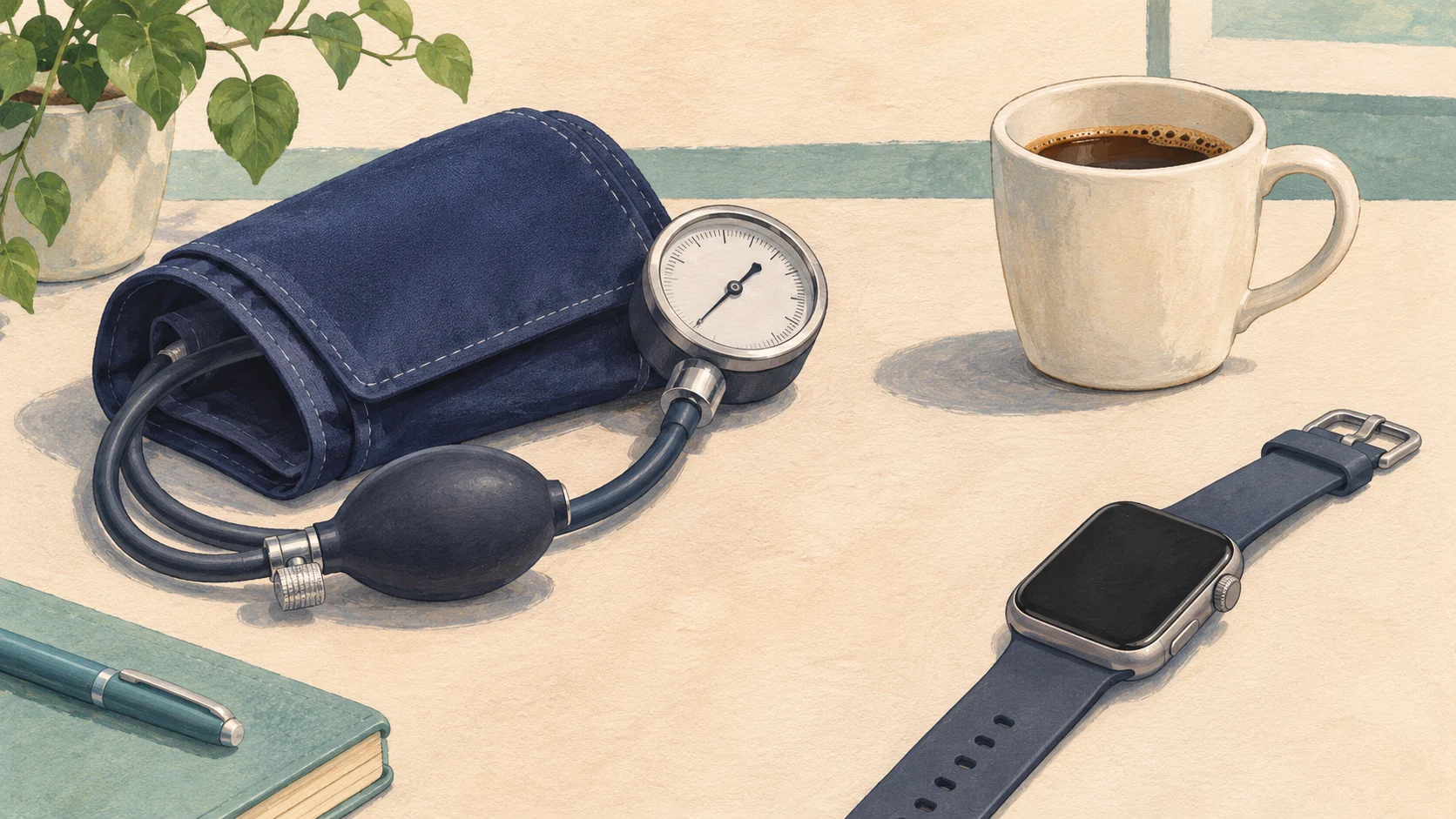
The American Heart Association recommends an appropriately sized upper-arm cuff, quiet rest and correct positioning. Its home-monitoring guidance asks people to avoid smoking, caffeine and exercise for 30 minutes beforehand and to rest for at least five minutes. These are measurement conditions, not a claim that symptoms become safe after a waiting period. AHA home monitoring.
- Record the device, time and whether you were resting or active.
- Keep the actual readings, rather than only a screenshot of a favourable average.
- Note symptoms and recent changes in nicotine, caffeine and medicines.
- Bring the record and device to an appointment if readings or symptoms concern you.
A lower watch number does not identify the heart rhythm. NHS guidance explains that an ECG may be needed to investigate palpitations. Recurrent episodes merit assessment. Palpitations that do not settle, or occur with chest pain, breathlessness or fainting, require emergency care. NHS palpitations guidance.
Which online claims prompted this article?
We reviewed discussions about home blood-pressure comparisons after quitting, unexpectedly low watch readings, exercise symptoms and claims about nicotine and caffeine metabolism. These observations suggested questions; their reported numbers were not pooled or treated as clinical evidence.
Frequently asked questions
Can nicotine pouches raise heart rate even without smoke?
Yes. The cited pouch study observed acute heart-rate increases. Absence of combustion does not remove nicotine exposure. The size of a change in one study cannot predict your own response.
Can coffee be contributing to palpitations as well?
Yes. Caffeine can cause palpitations and other stimulant effects, with substantial individual variation. Tell a clinician about all caffeine sources and nicotine exposure rather than assuming only one is relevant.
Does a lower resting heart rate after quitting prove my heart is healthy?
No. One reading does not identify a rhythm or explain symptoms. Unexpected changes accompanied by dizziness, fainting or other symptoms need assessment. A watch trend is useful context, not a medical clearance.
Can I exercise through a racing heartbeat or chest discomfort?
Do not use a forum comparison to justify pushing through symptoms. Stop the activity and seek assessment. Palpitations with chest pain, breathlessness or fainting, or palpitations that do not settle, need emergency care.
Does quitting pouches make caffeine stay in the body like quitting smoking does?
That cannot be assumed. Smoke-related CYP1A2 induction differs from nicotine exposure. The cited human patch study found no significant effect on caffeine metabolism. Stopping cigarettes at the same time changes the clinical context.
Can I compare a blood-pressure reading after coffee with one taken at rest?
The conditions differ, so the comparison cannot isolate a nicotine effect. Follow your clinician’s measurement plan and record the circumstances. Home readings complement care; they are not a reason to change prescribed medicines yourself.
References
Sources checked on 16 November 2026. Data years and study populations are stated in the text. This is a focused educational summary, not an exhaustive systematic review.