
Nicotine pouch can-opening studies: tracking moisture and pH during labeled use
A repeated-opening study asks how a nicotine pouch can performs after its seal is first broken. It does not answer the same question as unopened storage. The study should connect the commercial closure, the removal pattern and the attributes used to judge the remaining units.
Editorial scope: technical development and supplier review. Published 16 November 2026. The study and control suggestions below are not reported results from this supplier.
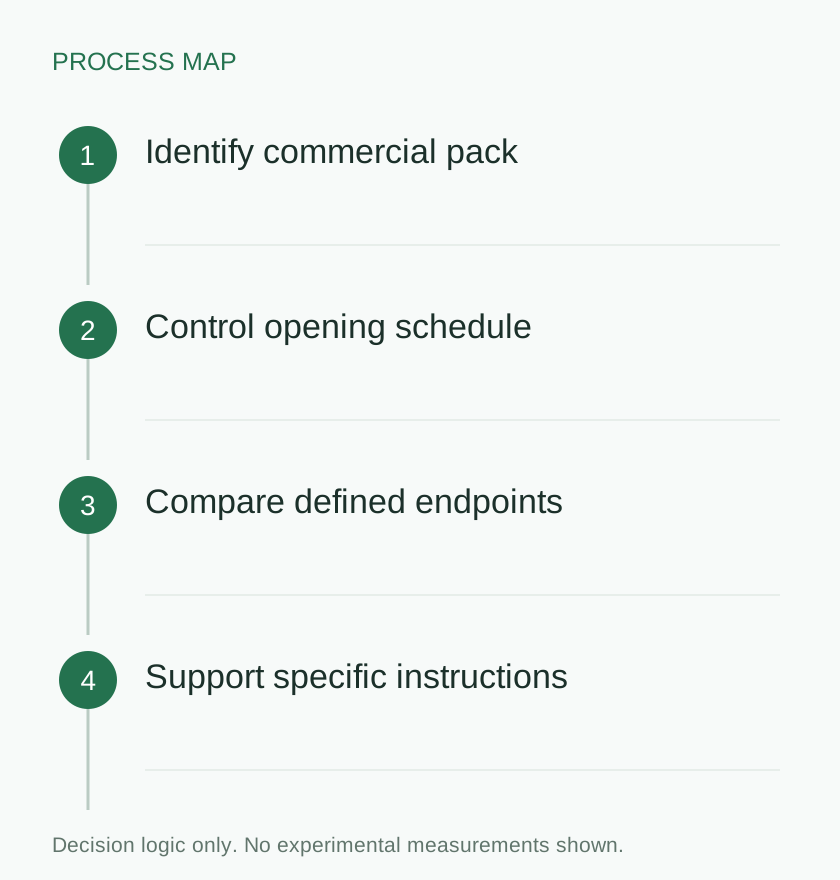
Define the complete pack history
Record can and closure revision, starting count, removal sequence, open duration and environmental conditions. Retain sealed controls from the same lot. Include the proposed instructions and any storage assumption. A product returned with an unknown history can inform an investigation but cannot replace a controlled comparison.
Track relevant attributes together
Moisture and extract pH may move differently from nicotine content. Report each using its defined method. Include appropriate physical, sensory and microbiological endpoints based on product risk and classification. Do not infer consumer exposure or comfort from a single pH or moisture value. Keep individual can histories so repeated sampling does not disappear into a pooled average.
Support an instruction rather than a universal promise
If performance changes near the end of the proposed use interval, review pack count, closure, formulation and instructions. Confirm any changes with suitable studies. A tested opening schedule does not cover every climate or misuse scenario. Market permissions and any labeling implications require separate review for the exact nicotine product.
Development review checklist
- Use the final commercial closure.
- Specify opening and removal events.
- Retain sealed controls.
- Measure nicotine, moisture and pH separately.
- Limit conclusions to the tested product and conditions.
Buyer questions
Can an unopened expiry date prove after-opening performance?
No. The exposure history differs once the seal is broken.
Does the last pouch necessarily match the first?
That is a question for a controlled in-use study, not an assumption.
Can pH alone explain a changed user experience?
No. Multiple product and individual factors can contribute.
Should a larger can be bridged to the same study?
Assess headspace, opening pattern, count and closure differences before doing so.
Can refrigeration be recommended from a room-temperature study?
No. Storage instructions need their own supporting evidence and product-specific assessment.
References and scope
- FDA: ICH Q2(R2), Validation of Analytical Procedures
Fit-for-purpose analytical validation framework; pharmaceutical guidance used as technical background, not a certification for these products.
- FDA: Marketing authorization for 20 ZYN products, January 16, 2025
Historical product-specific authorization, not a current count of all authorized products and not FDA approval or permission for other SKUs.
Discuss the specification and evidence needed for your project. Send the intended use, destination market and the attribute you need to verify. Commercial capability and acceptance criteria require a project-specific agreement.